Intro
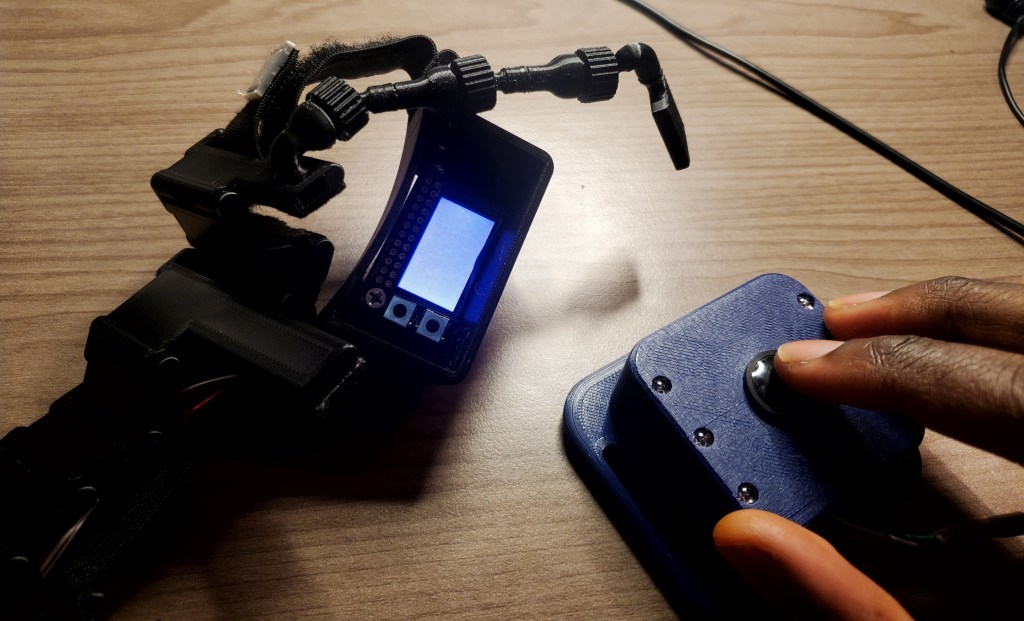
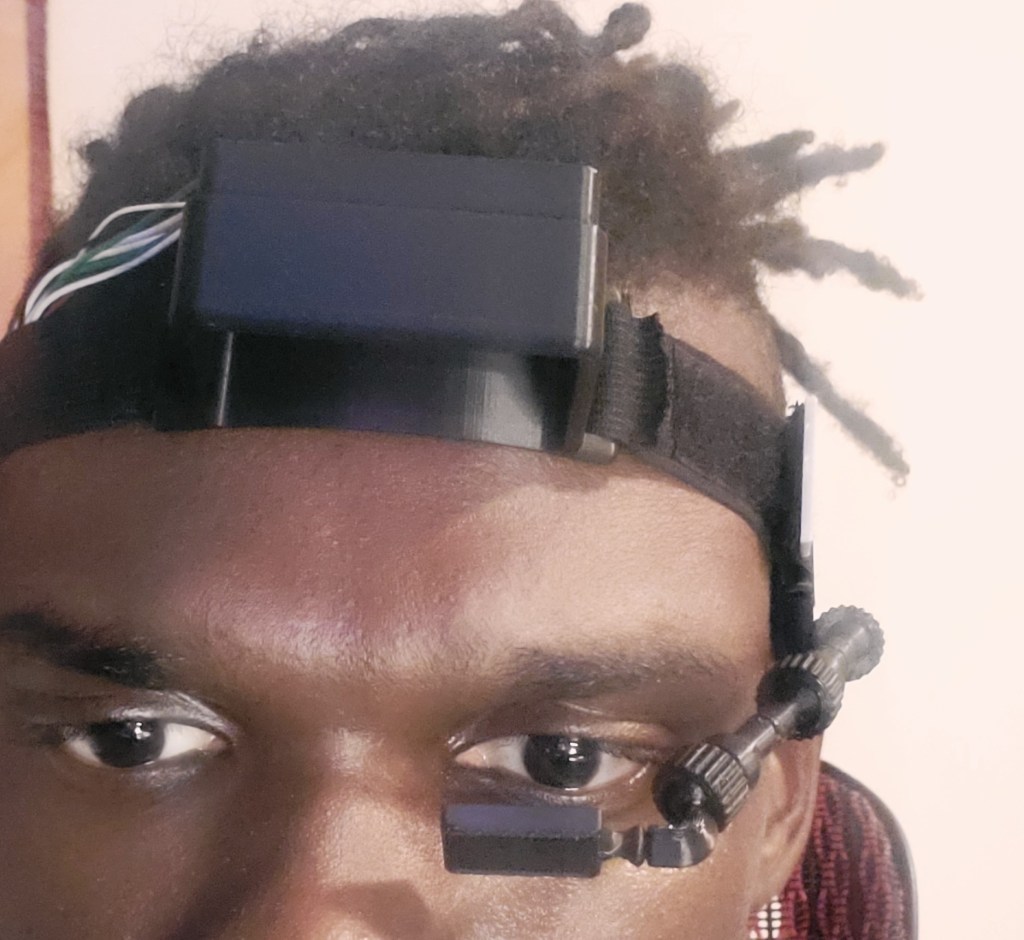
I saw a design that used a display perpendicular to the user’s forehead. With a mirror in front of the eye. Of course! Most wearable display designs I see use some configuration of magnification lens, mini projectors, or transparent displays. They do the job, but I thought the design I had seen at https://www.youtube.com/watch?v=f3AW8cRPy4o was a more simple build. Simple is better.
The magnification lenses are used to lessen the distance from the screen to the eye to bring the display into focus. Otherwise the display would need to be further away from the face. The design I found lessens the distance by orienting a mirror and display. The mirror is closer to the eye, but the image is still in focus. It kinda reminds me of how the concept of worm holes are described. They bend space to make location A closer to location B. Here the light is bent to make the image from the display appear closer to the eye. The light travels the same distance to be in focus.
Design
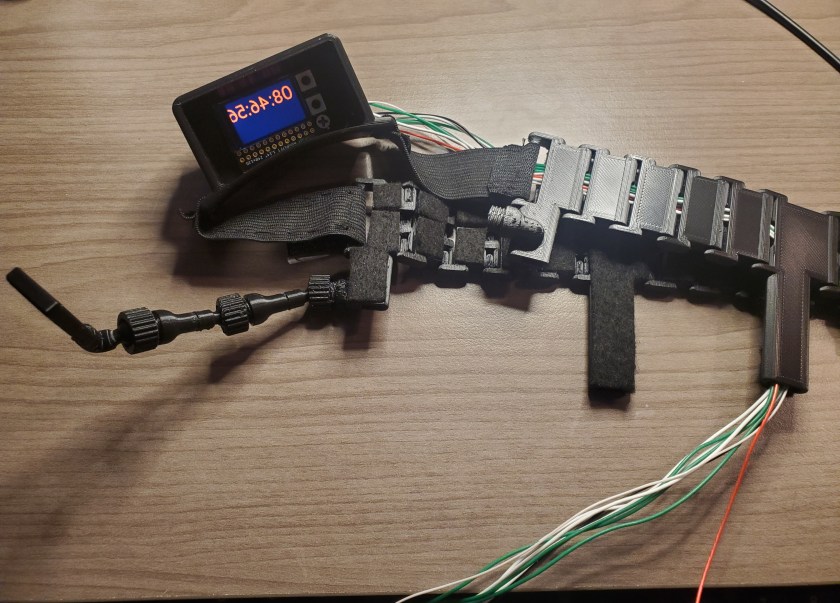
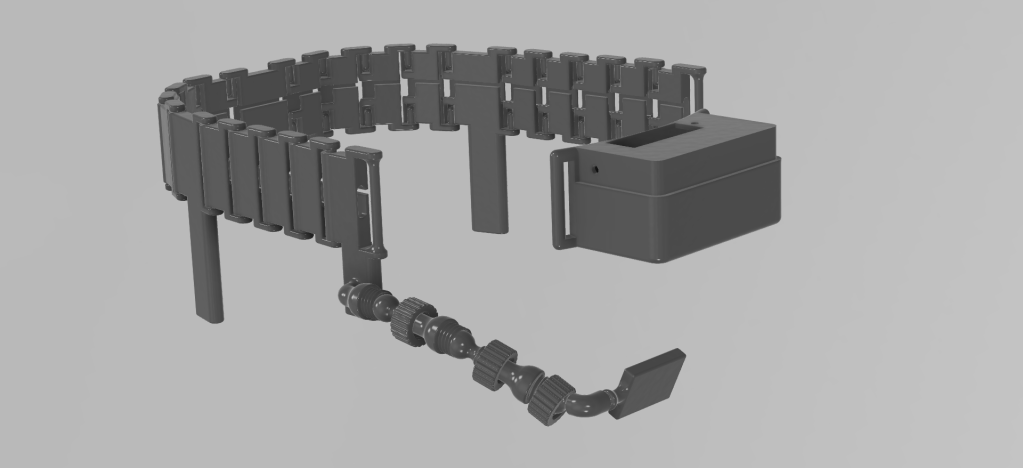
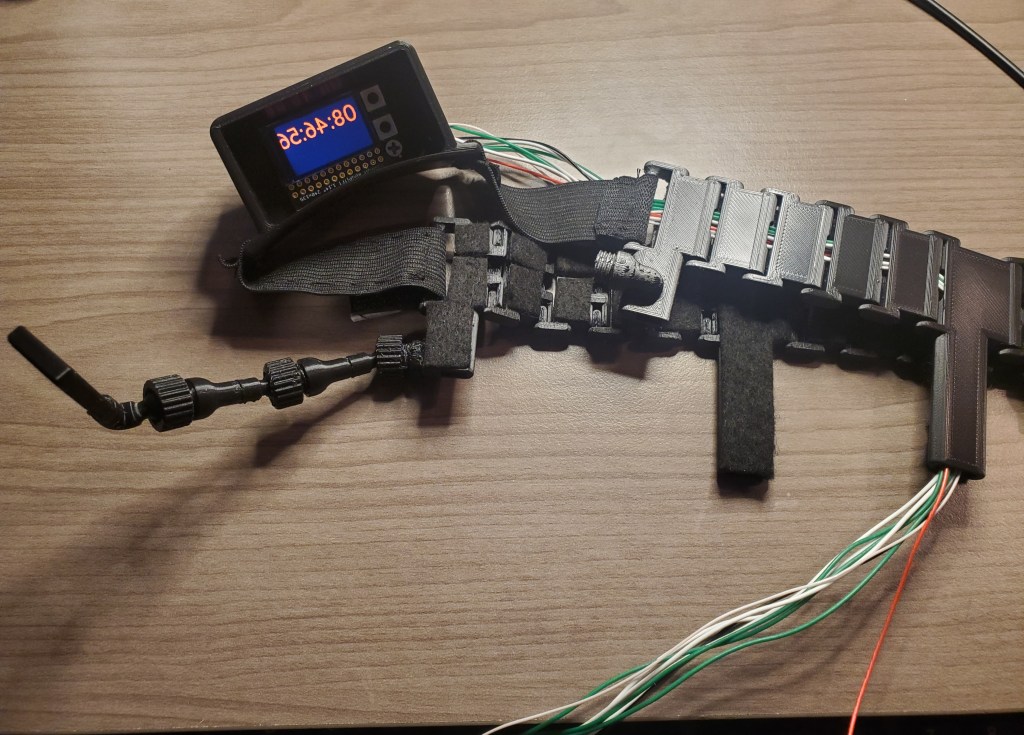
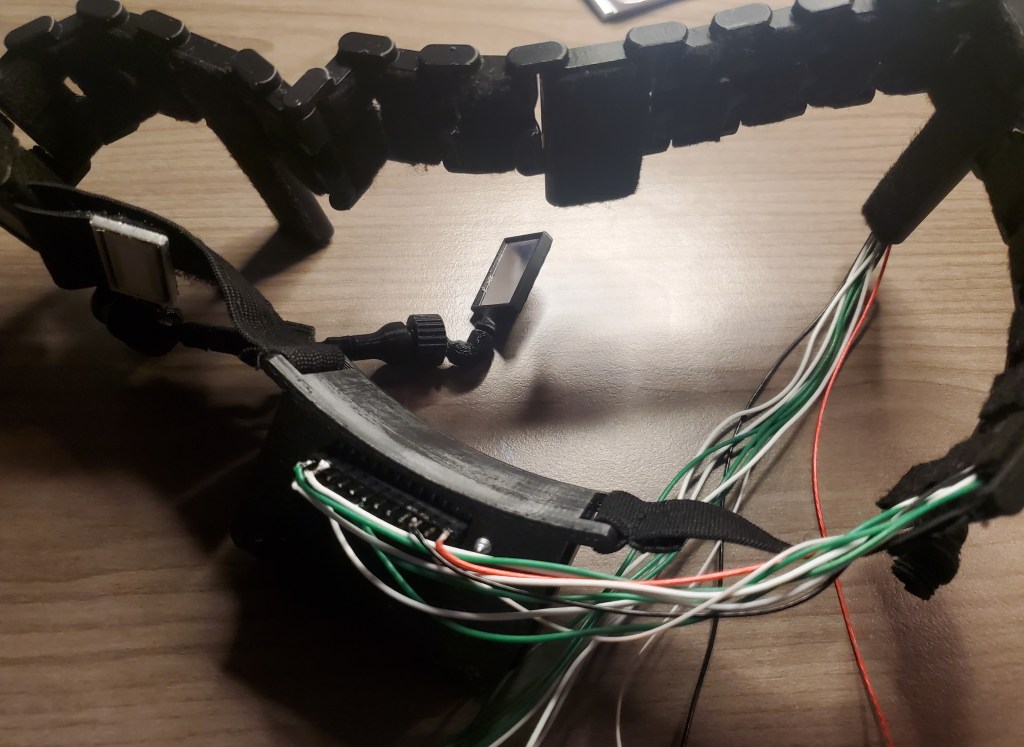
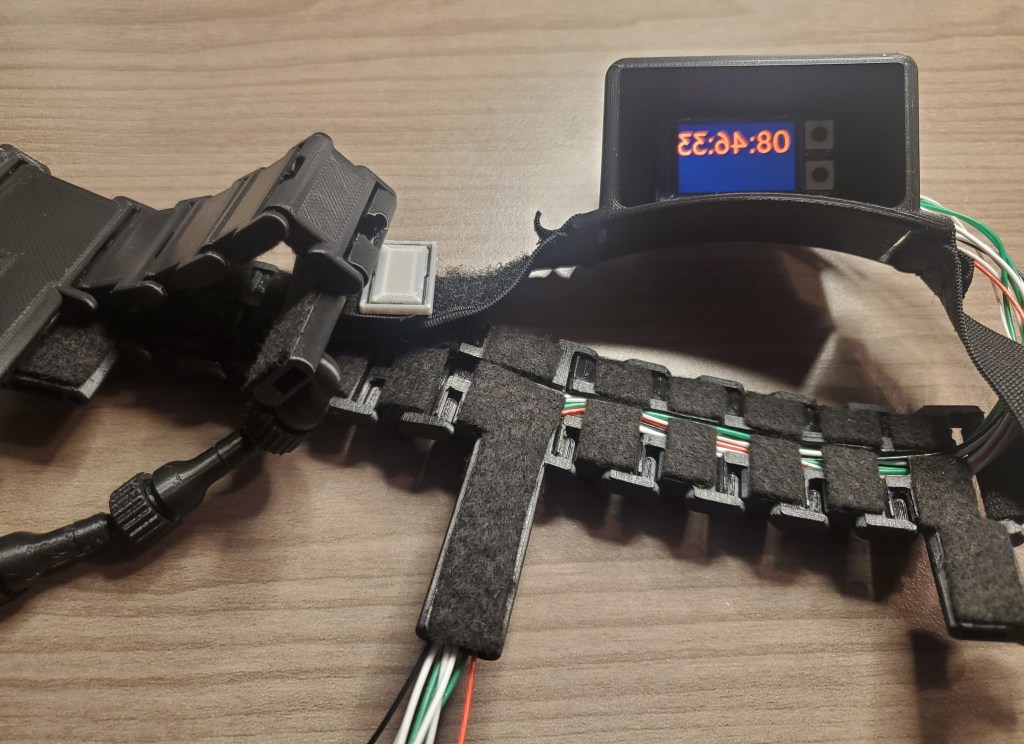
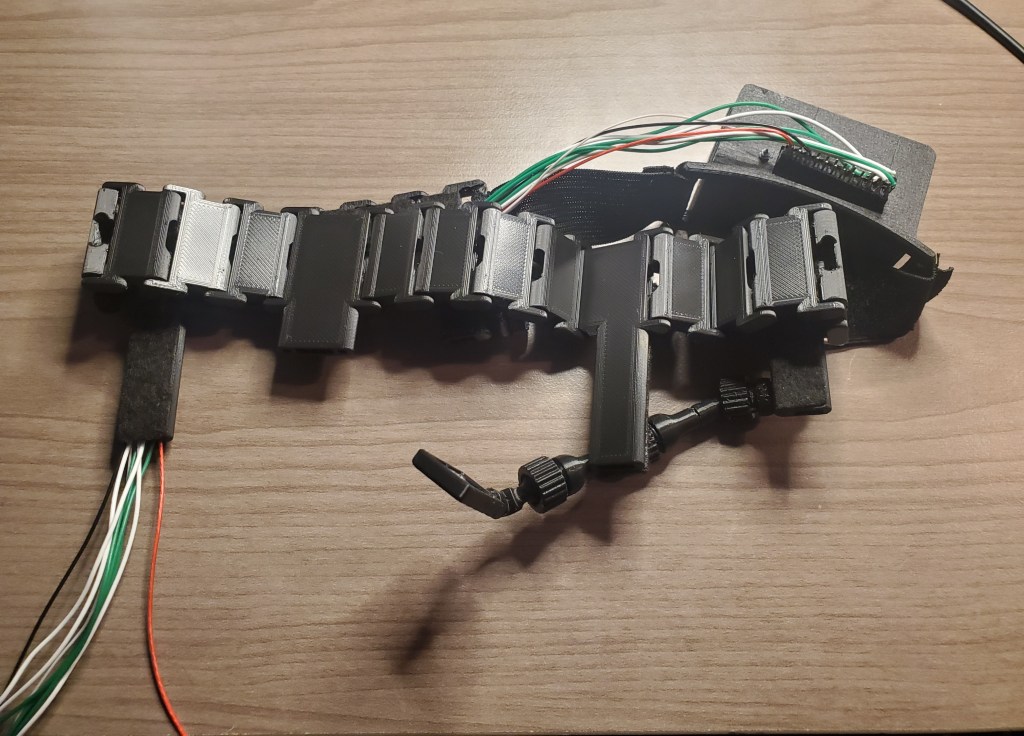
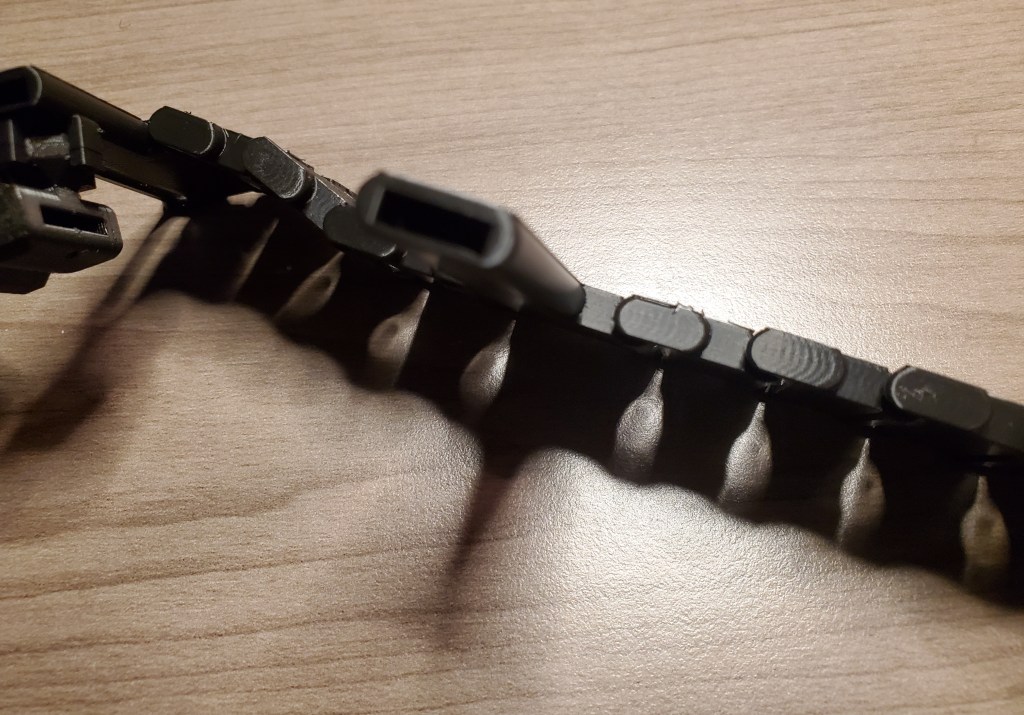
I designed these detachable link pieces to form a belt around the head. Each link has a little more than 180° articulation. They have hollow space in the middle to feed the wires through. For my head I needed two temple pieces, two behind the ear pieces, one back piece, and 16 small pieces.
I originally wanted the wires to come out the back piece but my wires were to short, so I have them coming out the behind the ear piece. The forehead piece where the display is protrudes past the display to block light.
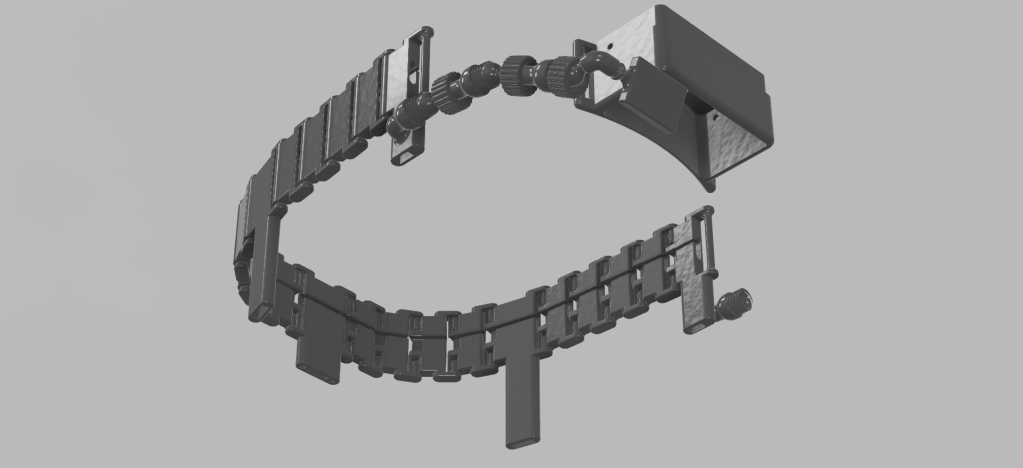
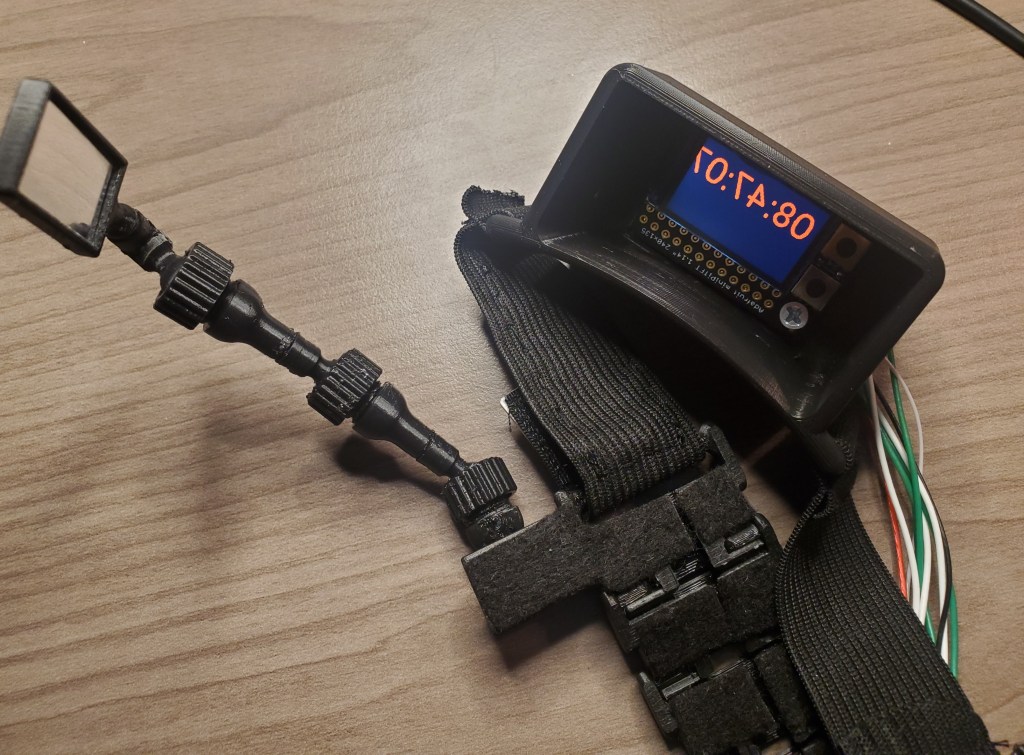
The mirror holder was the hardest part to design. I wanted it to be adjustable to have the display at different positions in my eyesight. I orignally had a thin gooseneck arm attached to the mirror, but it was too weak to hold its position when I moved. This design has ball and socket links with threaded caps to tighten them.
The mirror is from a sheet of cuttable mirror film with an adhesive back. I couldn’t find any transparent mirror film, that would be better. Also the mirror sticker can distort the image if the surface it is placed on isn’t completely flat. 3D printed surfaces can only be so flat.
Parts
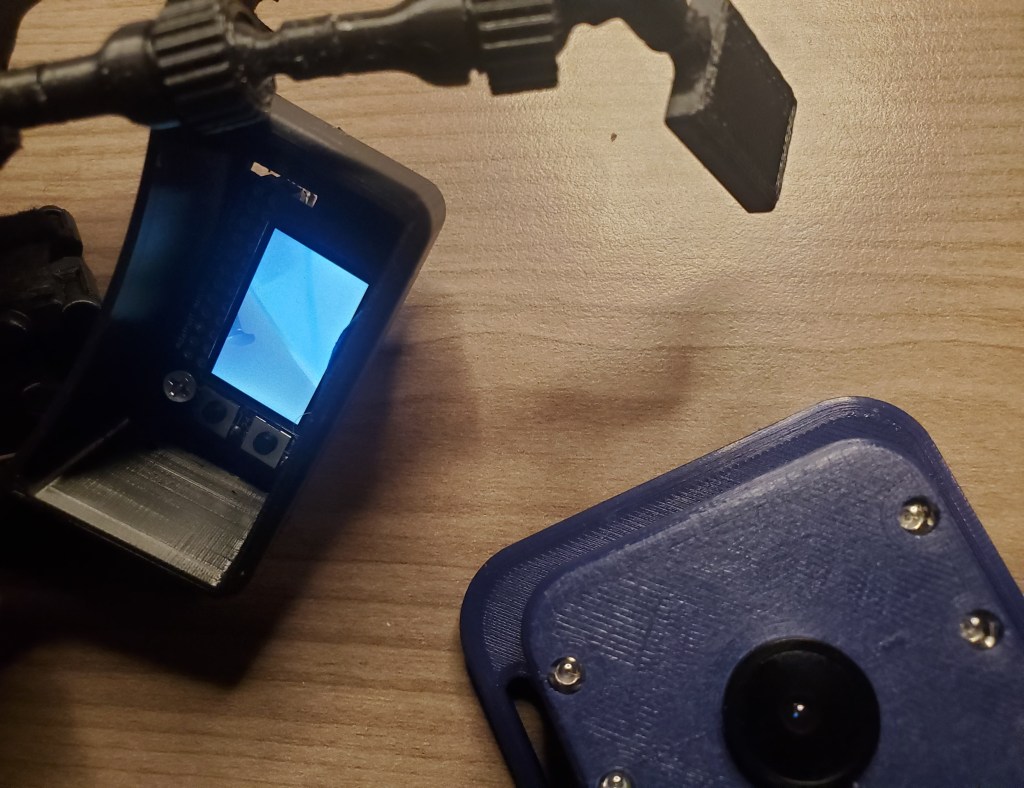
I’m using Adafruit’s Mini PiTFT for the display. https://www.adafruit.com/product/4393.
The display is wired to a Raspberry Pi 3b+. I had it applied to a Zero W, but the camera output was better on the 3b+.
 Booman's Workshop