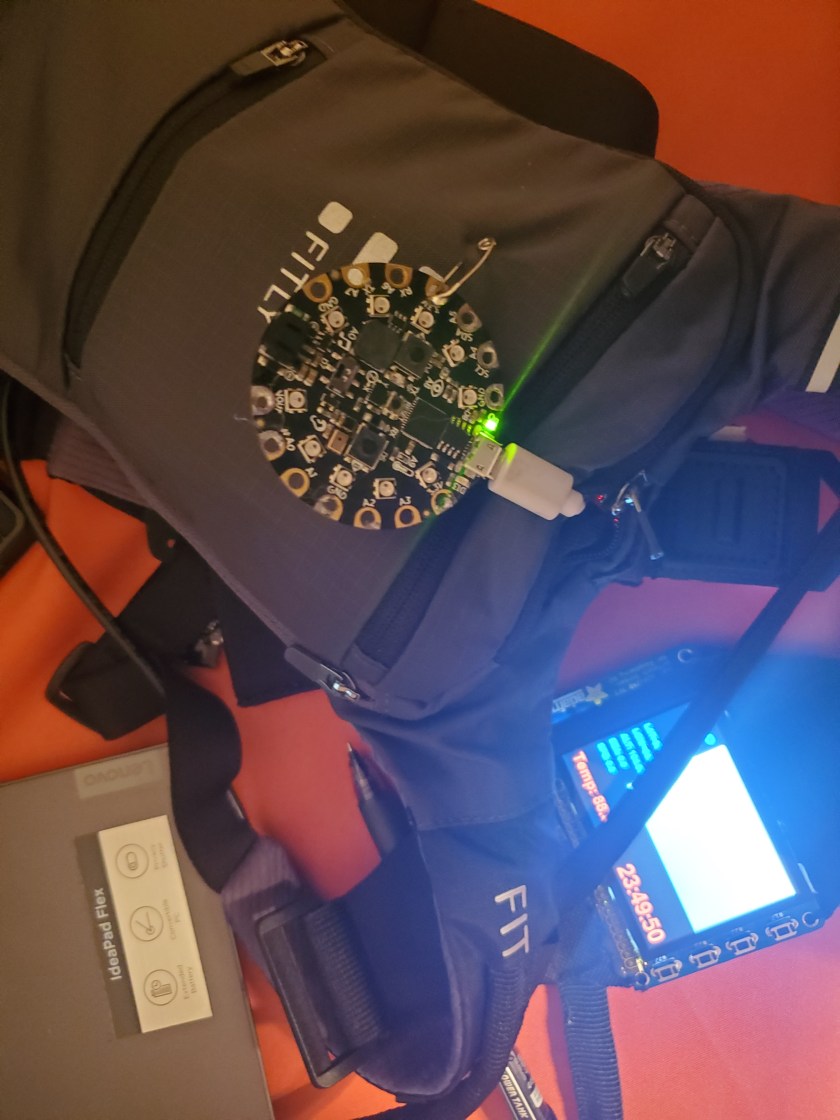
This will serve as my first update into the project called Wearable1. I named it Wearable 1, solely because it is something worn, and it is the first of many wearable ideas I plan to work on. I’m sure I will come up with a more creative name later.
This project has taken many forms leading to this current configuration. Each time I successfully implement a certain feature, I immediately start thinking of the next step. So unlike real engineering projects, this has no end design… per se. My only way of judging if this is a successful project is if I make use of the device.
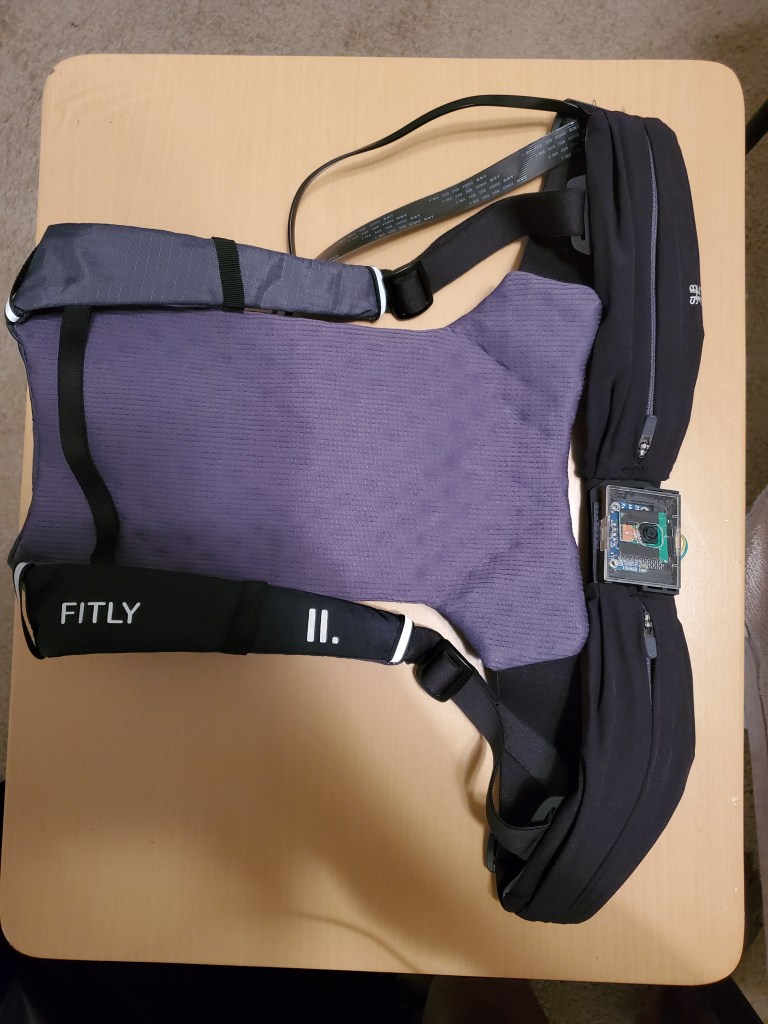
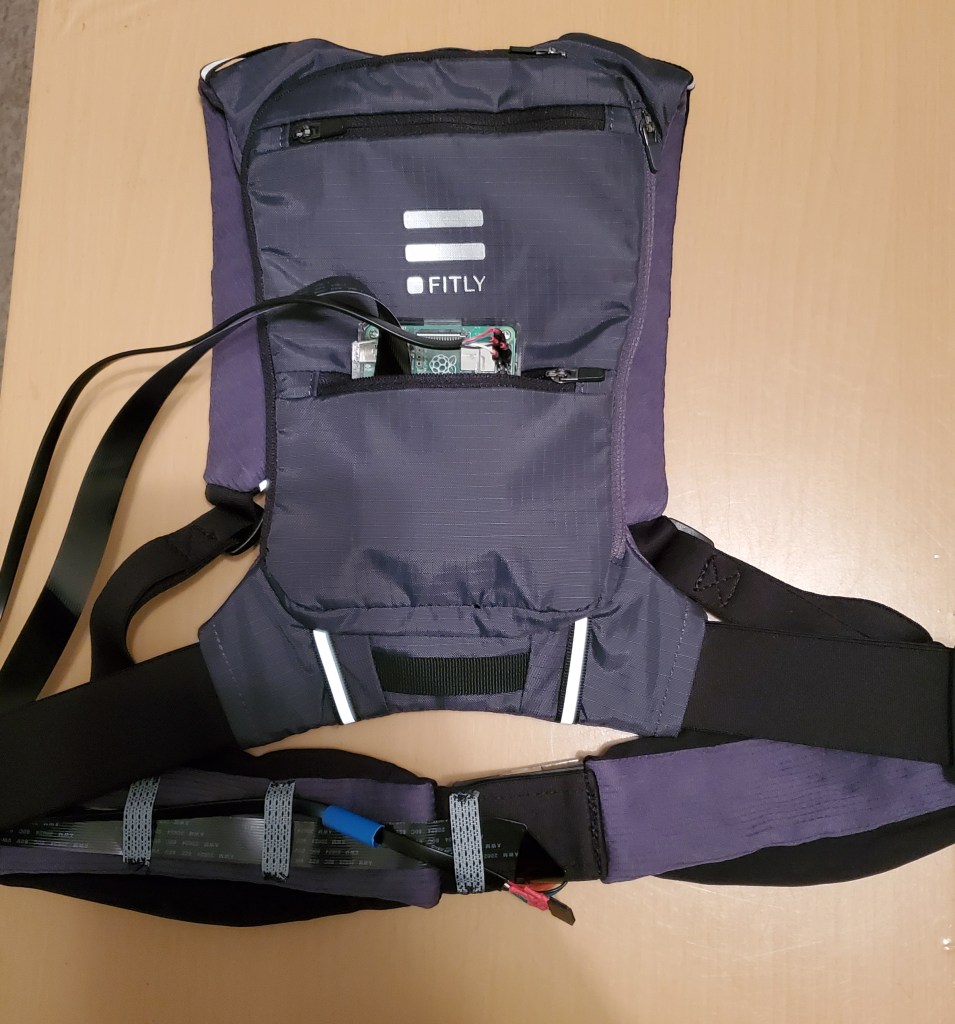
The device’s current form consists of a runners backpack, holding a Raspberry Pi, with a cord extending out from the Pi to the right arm where a TFT screen is strapped to my forearm. A USB webcam extends from the Pi to the middle of the backpack’s chest strap. There is also an ECG sensor (Pulse) strapped to the chest, also providing temperature readings from a Circuit Playground. The runner’s backpack was designed to hold the runner’s cell phone, among other things. The cell phones connects, via Bluetooth, to the Raspberry Pi. The Pi, being the hub of this system, drives the TFT display, showing the primary graphical user interface (GUI) for the system. The display can show the sensor values, the camera output, and provide controls that are sent to the smartphone. The smart phones sends GPS data to the Pi, which are displayed on the forearm screen, and receives commands from the Pi. Currently the smartphone commands are to control the background media (play/pause, next, previous, volume up, volume down) and toggle Google voice.
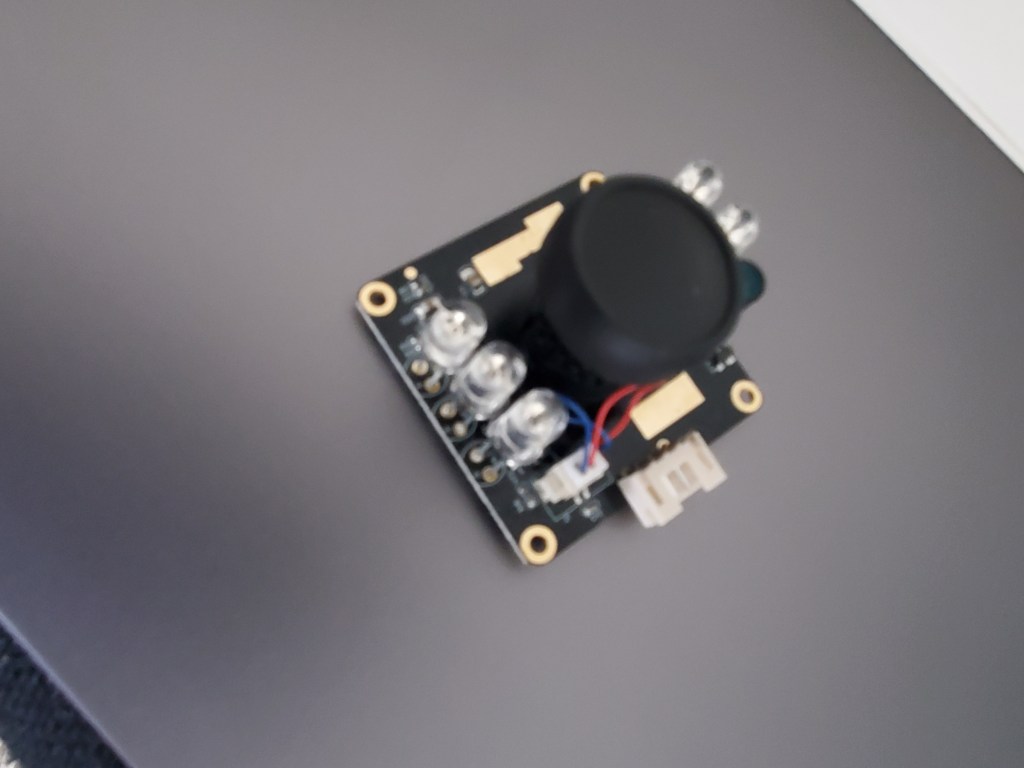
My intent for this system is to act as a platform to facilitate increased situational awareness and intuitive controls of peripheral systems. By increased situational awareness, I mean to provide myself with information sensed about my immediate surrounding. This includes my own biofeedback as well as the environment. Right now that is just an ECG sensor for my pulse, a temperature sensor, and the camera. The camera I am using can switch between day and night mode, with an attached light sensor and a few IR LEDs. Other sensors and information that can be incorporated into the platform can be EEG sensors (brain waves), respiration sensor(breathing), core body temperature, thermal imager, environmental gas sensors, and many more. After implementing the sensors, I want to create a subsystem, with preset ‘ideal’ conditions, that will notify the user of their current state, and how to change it. This way I am not overwhelmed by seeing a bunch of numbers, meters, and dials. But, at the same time, I am able to check those metrics to discern for myself. This idea was inspired by avionics systems on board our modern aircrafts, and Tony Stark’s artificial intelligent assistant JARVIS, or EDITH.
The idea behind the intuitive controls of peripheral systems, is to facilitate control of connected systems in an intuitive way that minimizes the user’s mental distractions. For example, recording video of what I am seeing without holding up my hands or having anything in them. Since the camera is fixed to my body, it sees which ever way I’m facing. This concept really will be incorporated into my plan for the next wearable project, which will be a smart assistant that is connected to my body, but can also operate of body. Think of the classic portrayal of a pirate captain and their pet bird, or monkey. More to come on that later. In the mean time check out these pictures of the setup as it stands at the time of this writing. Oh wait I must discuss why I am doing this.
There are two reasons I will be writing these posts and sharing every aspect of this project. First, coding is not my forte. My style of coding involves me having an idea, searching for something close to that idea, that I can use, adding and modifying it, and moving on. This current form of Wearable, at least its code, is comprised of me searching through dozens upon dozens of Github repositories, and too many hours spent on internet coding forums, mainly Stackoverflow. Since this shared community provided the sources for me, for free, I shall make it available to all. Second, I want to be able to have others contribute, or assist in my efforts. Its heard to help without context, so I want to be transparent. That is. Yep, I have no entrepreneurial asperations for this work at all. I do it as a hobby, no pressure, and I have already exceeded my expectations by a lot.
Ok, now check out these photos of the project. I will be posting updates, thoughts about issues, configurations, parts, and some lessons learned along the way.


 Booman's Workshop